The Forest Carbon Partnership Facility (FCPF) 2026 Annual Report highlights continued progress in results-based climate finance and expanding opportunities for countries to access international carbon markets.
FCPF 2026 Annual Report
November, 2026
FCPF Countries Deliver Results and Open New Finance Pathways
YOU'RE READING
FCPF Countries Deliver Results and Open New Finance Pathways
November, 2026
,
Results story
Announcement
The Forest Carbon Partnership Facility (FCPF) has released its 2026 Annual Report, highlighting how years of investment in forest protection and readiness are translating into verified emission reductions, results-based payments, and new opportunities for countries to access carbon finance.
Since its launch in 2008, the FCPF has supported countries in developing the institutions, systems, safeguards, and partnerships needed to implement jurisdictional REDD+ programs at scale. In Fiscal Year 2026, these investments continued to deliver tangible results, with countries generating and verifying emission reductions, receiving payments, and distributing benefits to the communities and stakeholders contributing to forest protection.
Several important milestones illustrate this progress.
Côte d’Ivoire reached a $23 million transaction with Emergent for emission reductions generated through its FCPF program, with payment already made for more than 600,000 carbon credits.
In Costa Rica, a modification to its Emission Reductions Payment Agreement (ERPA) will allow the country to sell up to 4.7 million emission reductions in carbon markets, while retaining the FCPF as a possible buyer.
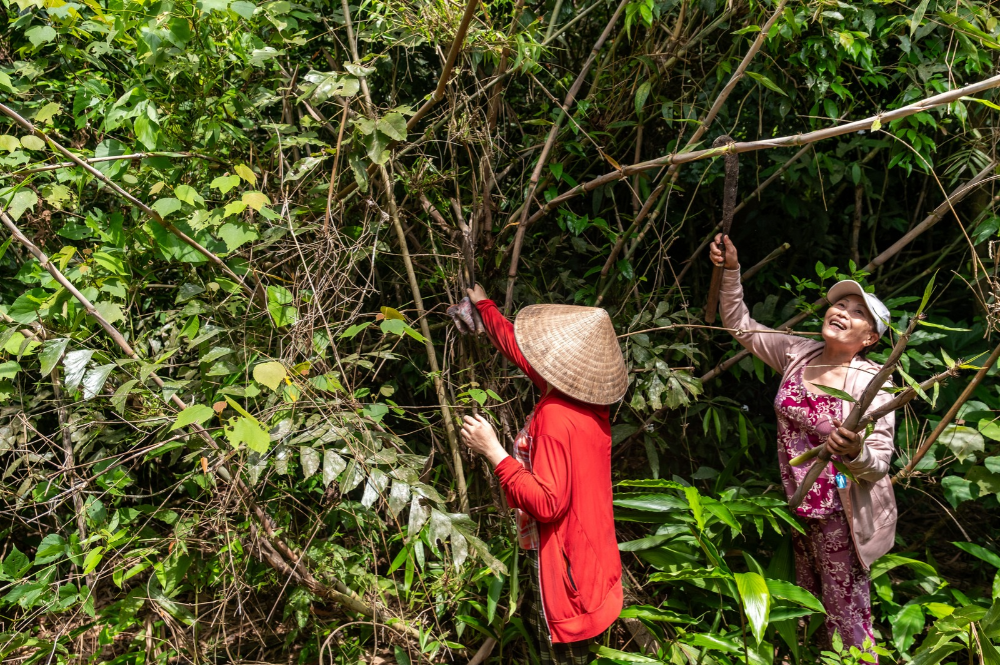
Viet Nam and Indonesia also successfully completed their ERPAs. Viet Nam fully delivered its contracted emission reductions, sold additional reductions to the FCPF, and advanced implementation of its benefit-sharing plan, with more than half of the funds already disbursed to beneficiaries. The country has also signed an ERPA with the LEAF Coalition, demonstrating how FCPF investments can help unlock additional sources of forest finance.
As the Facility approaches completion, new partnerships, including an agreement with the Architecture for REDD+ Transactions (ART), are creating pathways for FCPF programs to transition to international standards such as ART’s TREES 3.0. The recent approval of the FCPF Standard as an eligible emissions unit program under Phase 1 of CORSIA further expands market opportunities for qualifying credits.
“The FCPF’s legacy is not only the emission reductions it has generated or the payments and benefits it has delivered. It is also the proof of concept of this model as well as the enabling environment for governments to continue mobilizing forest finance at scale,” writes Andres Espejo, FCPF Fund Manager.
He adds, “These achievements are helping inform the next generation of carbon finance programs, including SCALE, as the World Bank Group increasingly supports countries not only in generating credible emission reductions, but also in bringing them to market and mobilizing additional finance.”